
Famous Temples
Explore South India’s sacred shrines, rich heritage, and timeless traditions.
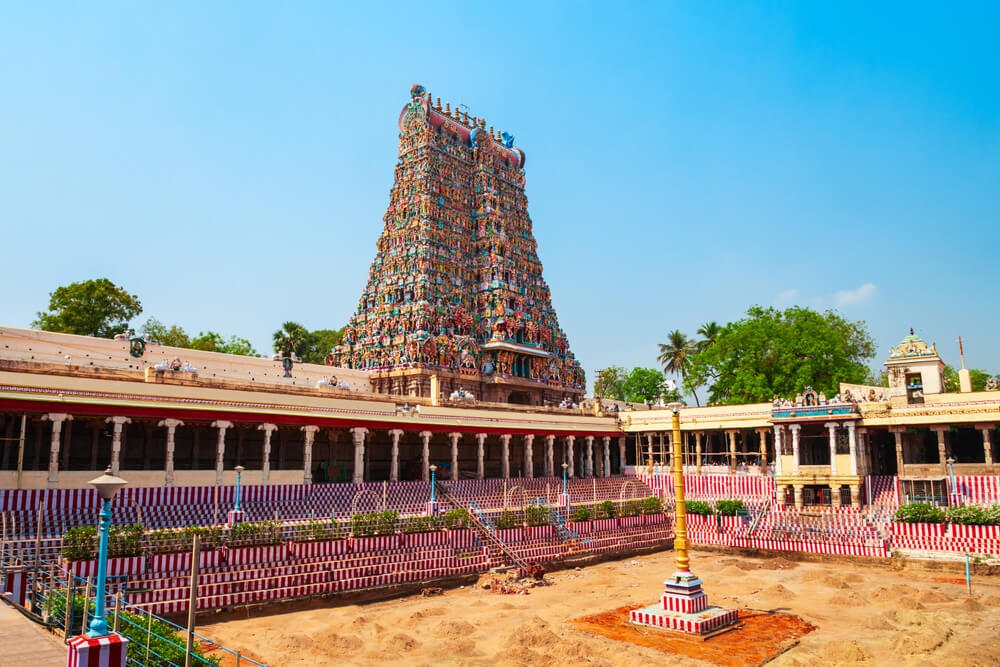
Meenakshi Amman Temple
The Meenakshi Amman Temple in Madurai is one of the most iconic and revered temples in South India, dedicated to Goddess Meenakshi (an incarnation of Goddess Parvati) and Lord Sundareswarar (a form of Lord Shiva). Known as the cultural and spiritual heart of Madurai, this temple is a masterpiece of Dravidian architecture, featuring towering gopurams (gateway towers) adorned with thousands of vividly painted sculptures depicting gods, goddesses, demons, and mythical creatures.
Spread over a sprawling complex, the temple is renowned for its imposing 14 gopurams, intricate carvings, and the Hall of Thousand Pillars, each pillar showcasing exquisite craftsmanship. The temple’s sanctum sanctorum houses the deities Meenakshi and Sundareswarar, attracting millions of devotees and tourists from across the globe.
The temple also serves as the center of the Meenakshi Tirukalyanam festival, celebrating the divine marriage of Meenakshi and Sundareswarar with grandeur and devotion. Beyond its religious significance, the temple is a living symbol of Tamil culture, heritage, and art, offering visitors a glimpse into centuries-old traditions that continue to thrive in Madurai.
Kanchipuram, Tamil Nadu – The City of Temples
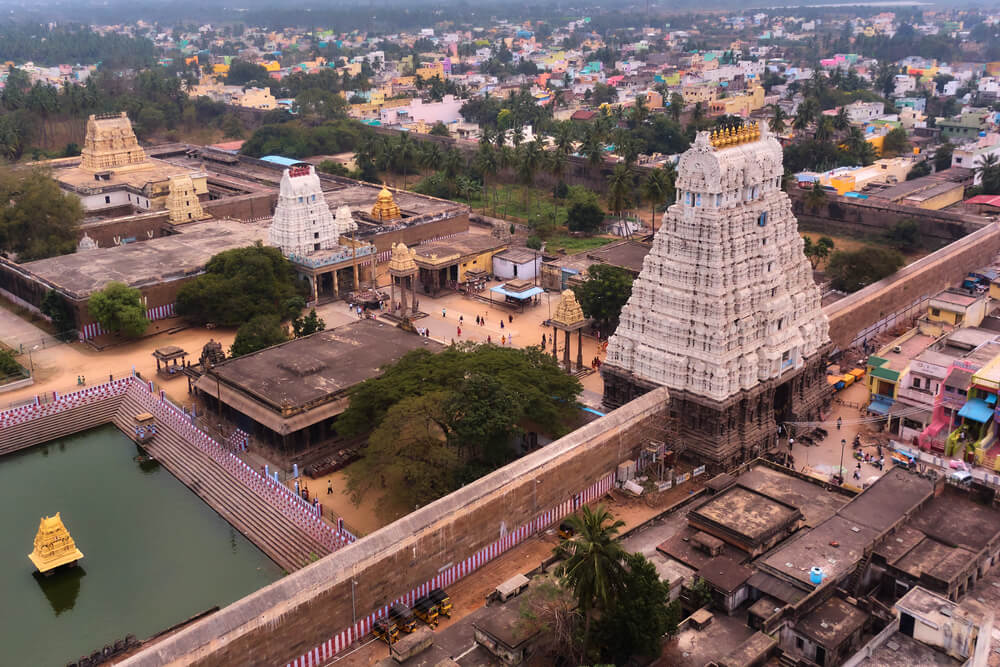
Kanchipuram, fondly known as the “City of Temples,” is one of the most sacred and historically significant cities in Tamil Nadu. This ancient city is dotted with hundreds of temples, each reflecting the grandeur of Dravidian architecture and centuries of spiritual tradition. Among its most prominent temples are the Kailasanathar Temple and the Ekambareswarar Temple, both dedicated to Lord Shiva and celebrated for their architectural brilliance and religious importance.
The Kailasanathar Temple, dating back to the Pallava dynasty, stands as a testament to early Dravidian architectural styles, featuring exquisite stone carvings, intricately sculpted pillars, and serene sanctums that transport visitors to a bygone era. The Ekambareswarar Temple, one of the largest temples in Kanchipuram, is famous for its towering gopuram (gateway tower), sprawling courtyards, and the sacred mango tree believed to be over 3,500 years old, symbolizing the four Vedas.
Kanchipuram is not just a center of devotion but also a cultural hub where art, history, and spirituality converge. The temples here host vibrant festivals, traditional music and dance performances, and rituals that have been preserved for generations, making it a must-visit destination for pilgrims, architecture enthusiasts, and travelers alike.
Tirupati, Andhra Pradesh – The Abode of Lord Venkateswara
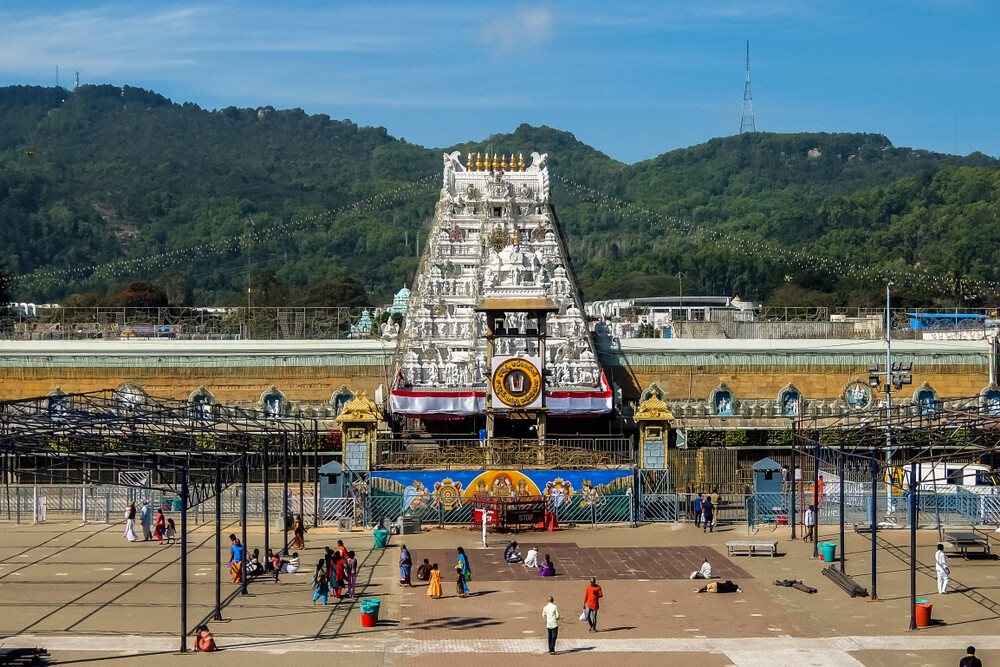
Tirupati, nestled in the scenic hills of Andhra Pradesh, is home to the world-famous Sri Venkateswara Temple, also known as the Tirumala Temple. Dedicated to Lord Venkateswara, an incarnation of Lord Vishnu, this sacred shrine is one of the most visited pilgrimage destinations globally, drawing millions of devotees every year.
Perched atop the Tirumala Hills, the temple is renowned not only for its spiritual significance but also for its stunning Dravidian architecture. The towering gopurams (entrance towers), intricately carved pillars, and the sanctum housing the idol of Lord Venkateswara create an aura of divinity and devotion. The temple’s rituals, traditions, and the famous Laddu Prasadam have become an integral part of its identity, offering a blend of spirituality and cultural richness.
Apart from its religious prominence, the temple complex is surrounded by picturesque landscapes, including lush greenery, serene waterfalls, and scenic trekking routes, making Tirupati a perfect blend of devotion and natural beauty. With well-organized facilities for pilgrims, continuous temple activities, and grand festivals like Brahmotsavam, Tirupati stands as a symbol of faith, architectural brilliance, and cultural heritage, attracting devotees and tourists from across the globe.
Thiruvananthapuram, Kerala – Padmanabhaswamy Temple
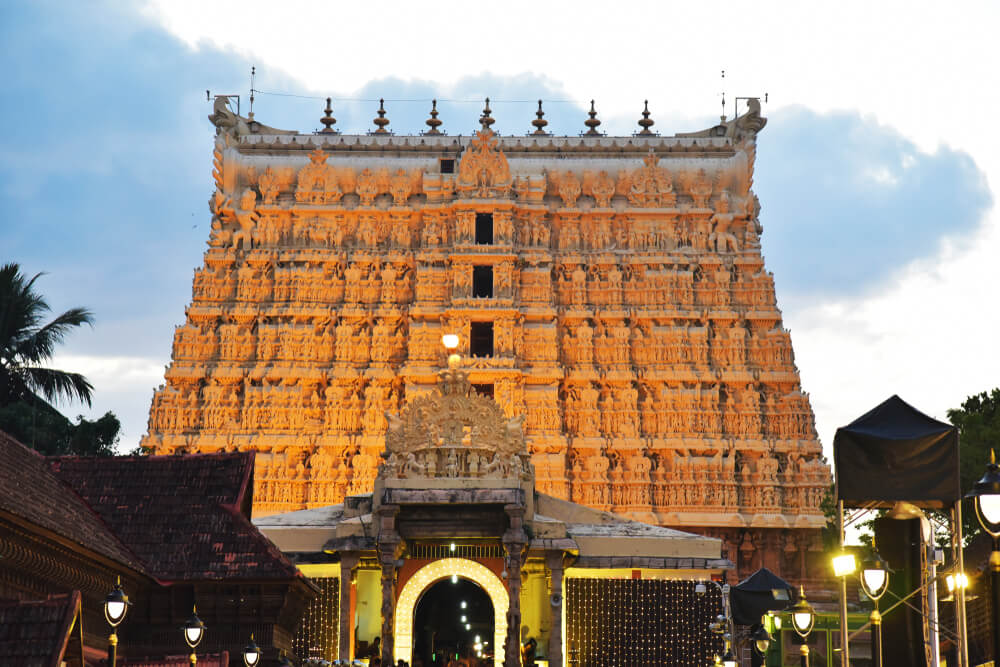
Thiruvananthapuram, the capital city of Kerala, is home to the magnificent Padmanabhaswamy Temple, dedicated to Lord Padmanabhaswamy (a form of Lord Vishnu). The temple is renowned for its architectural grandeur, featuring intricate stone carvings, towering gopurams, and sprawling courtyards that reflect traditional Kerala temple design.
The deity is depicted in a reclining posture on the serpent Ananta, adorned with gold ornaments and precious jewels, symbolizing divine opulence and spiritual significance. Known for its rich history, cultural heritage, and elaborate rituals, the temple continues to be a center of devotion for thousands of devotees. Beyond its religious importance, the Padmanabhaswamy Temple stands as a testament to Kerala’s art, architecture, and sacred traditions, attracting both pilgrims and tourists seeking spiritual and historical experiences.
Guruvayur, Kerala – The Temple of Lord Krishna
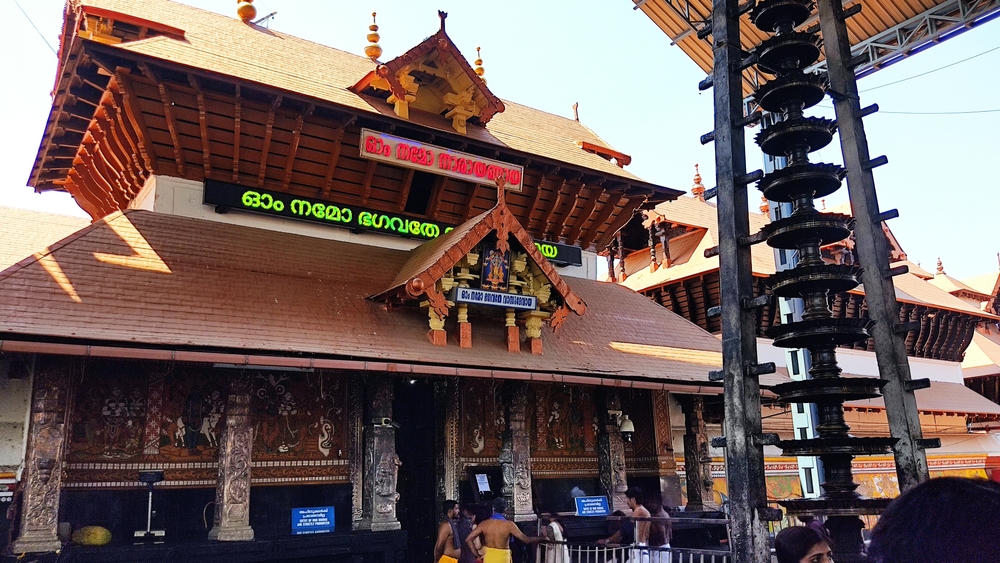
Guruvayur, located in Kerala, is one of the most revered pilgrimage sites in India, dedicated to Lord Krishna. The Guruvayur Temple is famous for its ancient rituals, vibrant festivals, and devotional practices, drawing devotees from across the country. The temple houses the idol of Lord Krishna, believed to have been worshipped by the deity himself, adding immense spiritual significance to the shrine.
The temple’s architecture reflects traditional Kerala style, with ornate woodwork, intricate carvings, and sacred sanctums that create an atmosphere of peace and devotion. Festivals like Guruvayur Ekadasi and daily rituals such as Nirmalya Darshan and Seeveli processions showcase the temple’s rich cultural and religious heritage. Guruvayur is not just a spiritual center but also a symbol of faith, devotion, and Kerala’s temple traditions, making it a must-visit destination for pilgrims and cultural enthusiasts alike.
Srirangam, Tamil Nadu – Ranganathaswamy Temple
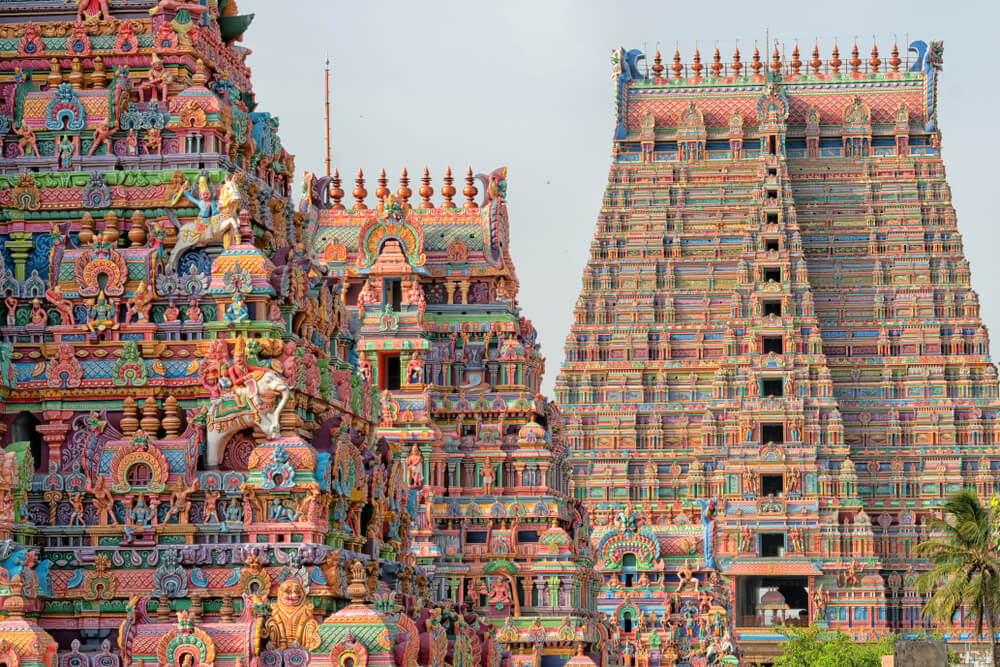
Srirangam, located in Tamil Nadu, is home to the Ranganathaswamy Temple, one of the largest functioning Hindu temples in the world. Dedicated to Lord Ranganatha (a reclining form of Lord Vishnu), the temple is an architectural marvel, featuring seven concentric walls, towering gopurams, and intricately carved pillars that reflect the grandeur of Dravidian temple architecture.
The temple complex spans several hectares and includes numerous shrines, halls, and water tanks, each with its own historical and spiritual significance. Srirangam is also famous for its vibrant festivals, especially the Vaikunta Ekadasi, which attracts thousands of devotees every year. Beyond its religious importance, the temple is a center of culture, heritage, and Tamil architectural brilliance, making it a must-visit destination for pilgrims, historians, and travelers interested in India’s spiritual and architectural legacy.
Thiruvananthapuram, Kerala – Padmanabhaswamy Temple
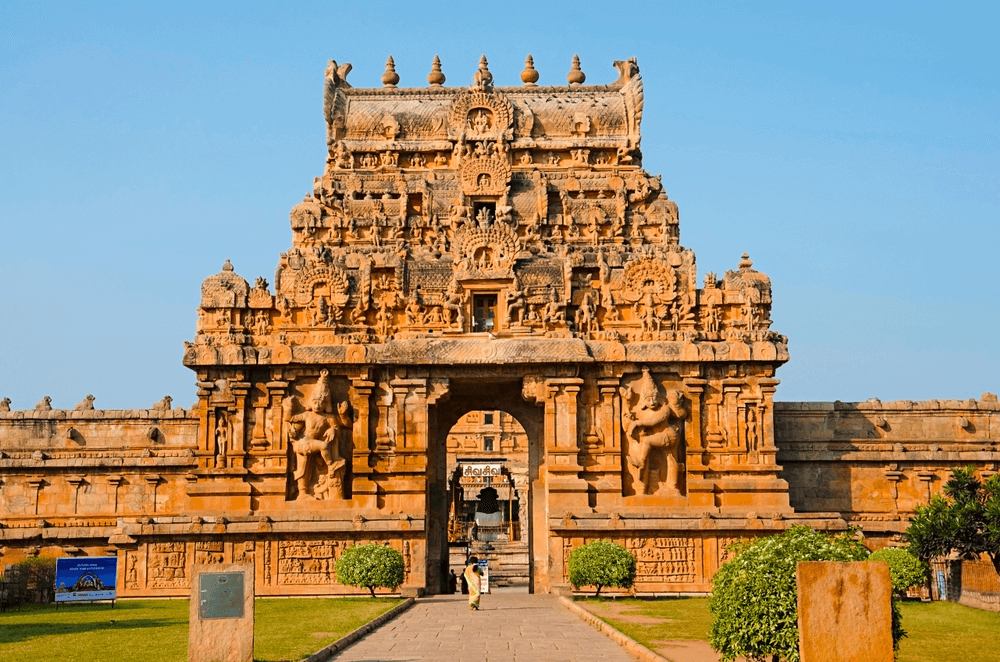
Thiruvananthapuram, the capital city of Kerala, is home to the magnificent Padmanabhaswamy Temple, dedicated to Lord Padmanabhaswamy, a reclining form of Lord Vishnu. The temple is renowned for its architectural grandeur, featuring elaborately carved gopurams, ornate sanctums, and sprawling courtyards that showcase the finest examples of traditional Kerala temple architecture.
The deity is adorned with gold ornaments and precious jewels, making the temple one of the richest and most revered spiritual sites in India. The temple is also famous for its rich rituals, historic traditions, and elaborate festivals, attracting devotees and tourists alike. Beyond its religious significance, the Padmanabhaswamy Temple stands as a symbol of Kerala’s cultural heritage, art, and devotion, offering visitors a deeply spiritual and visually stunning experience.
Chidambaram, Tamil Nadu – Nataraja Temple
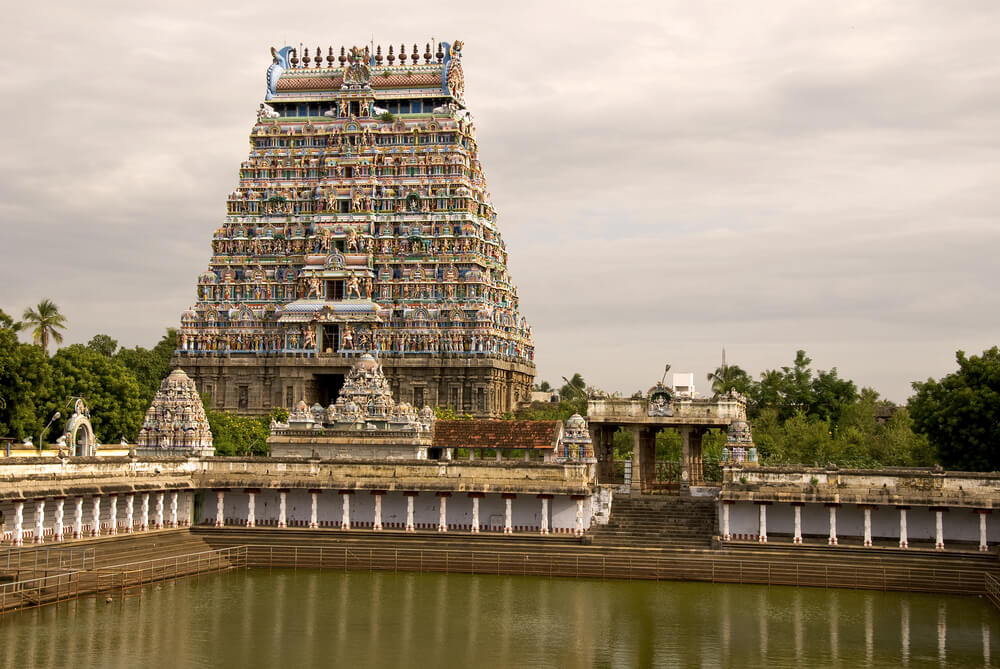
Chidambaram, located in Tamil Nadu, is famous for the Nataraja Temple, dedicated to Lord Shiva in his cosmic dancer form, Nataraja. This historic temple is a masterpiece of Dravidian architecture, featuring intricately carved halls, towering gopurams, and exquisitely sculpted pillars that depict scenes from Hindu mythology and the divine dance of Shiva, symbolizing creation, preservation, and destruction.
The temple complex is renowned for its vast courtyards, sacred tanks, and golden roofed sanctum (Chit Sabha), which houses the deity performing the Ananda Tandava (dance of bliss). Chidambaram is also a major center of Shaivism, attracting thousands of devotees, scholars, and tourists from around the world. Festivals like Margazhi Thiruvathirai celebrate Lord Nataraja with grandeur, combining spiritual devotion with cultural richness. The temple not only serves as a place of worship but also stands as a testament to ancient Indian art, architecture, and philosophy, making Chidambaram an essential pilgrimage and cultural destination.
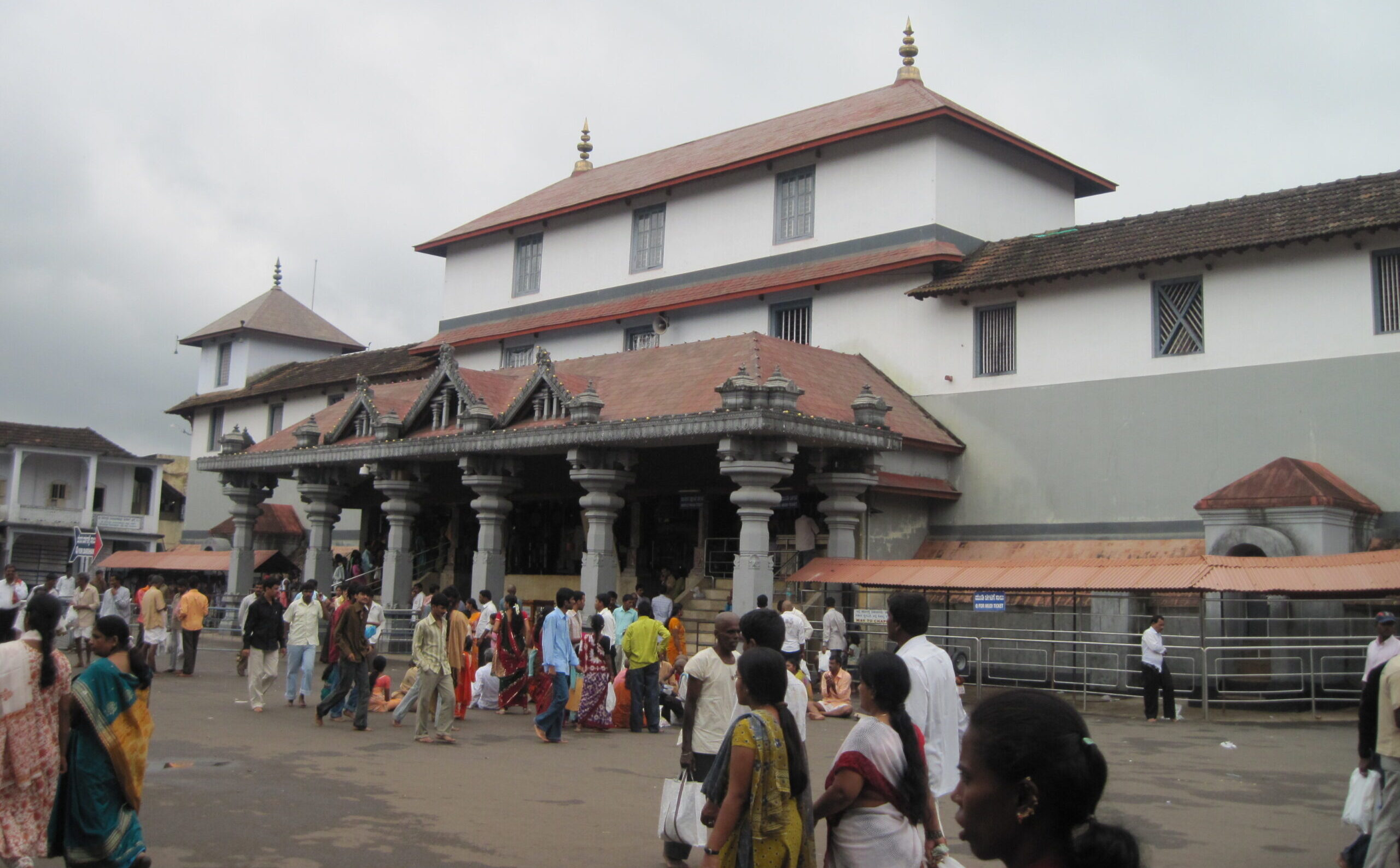
Sri Manjunatha Swamy Temple, Karnataka – Abode of Lord Shiva
The Sri Manjunatha Swamy Temple, located in Dharmasthala, Karnataka, is a revered pilgrimage site dedicated to Lord Manjunatha (a form of Lord Shiva). Known for its spiritual significance and serene surroundings, the temple draws thousands of devotees seeking blessings and spiritual solace.
The temple complex showcases a blend of traditional Dravidian and local architectural styles, featuring intricately carved pillars, elegant sanctums, and beautifully adorned shrines. Apart from its architectural beauty, the temple is famous for its daily rituals, poojas, and charitable activities, including free food distribution (Anna Dana) and community services that highlight the temple’s commitment to dharma.
Festivals like Maha Shivaratri are celebrated with grandeur, attracting pilgrims from across the country. The Sri Manjunatha Swamy Temple not only serves as a spiritual hub but also stands as a testament to Karnataka’s rich cultural and religious heritage, offering visitors an experience of devotion, tradition, and architectural brilliance.
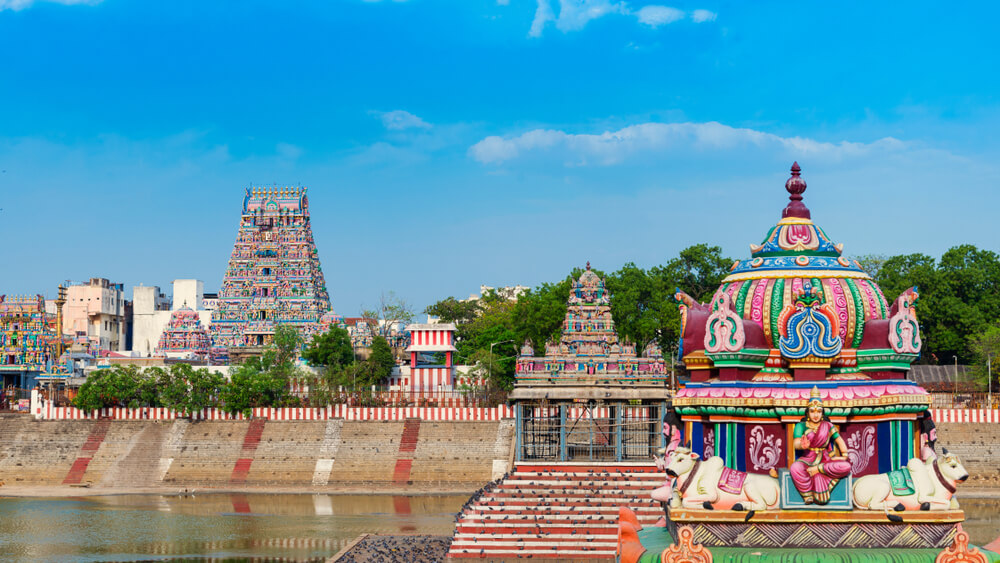
Kapaleeshwarar Temple, Chennai – Ancient Shiva Temple of Tamil Nadu
The Kapaleeshwarar Temple, located in Mylapore, Chennai, is a renowned Hindu temple dedicated to Lord Shiva, worshipped here as Kapaleeshwarar, along with Goddess Parvati as Karpagambal. This historic temple is a fine example of Dravidian architecture, featuring a towering gopuram (gateway tower) adorned with vibrant sculptures of gods, goddesses, and mythical creatures.
The temple complex is a bustling center of devotion, culture, and community life, with spacious courtyards, intricately carved halls, and sacred tanks. It is famous for its elaborate rituals, daily poojas, and grand festivals, most notably the Arubathimoovar festival, which attracts thousands of devotees each year.
Kapaleeshwarar Temple stands as a symbol of Tamil heritage, religious devotion, and architectural brilliance, drawing not only pilgrims but also history enthusiasts and tourists eager to experience its spiritual ambiance and cultural vibrancy. The temple’s serene atmosphere, combined with its rich traditions, makes it one of the must-visit landmarks in Chennai.
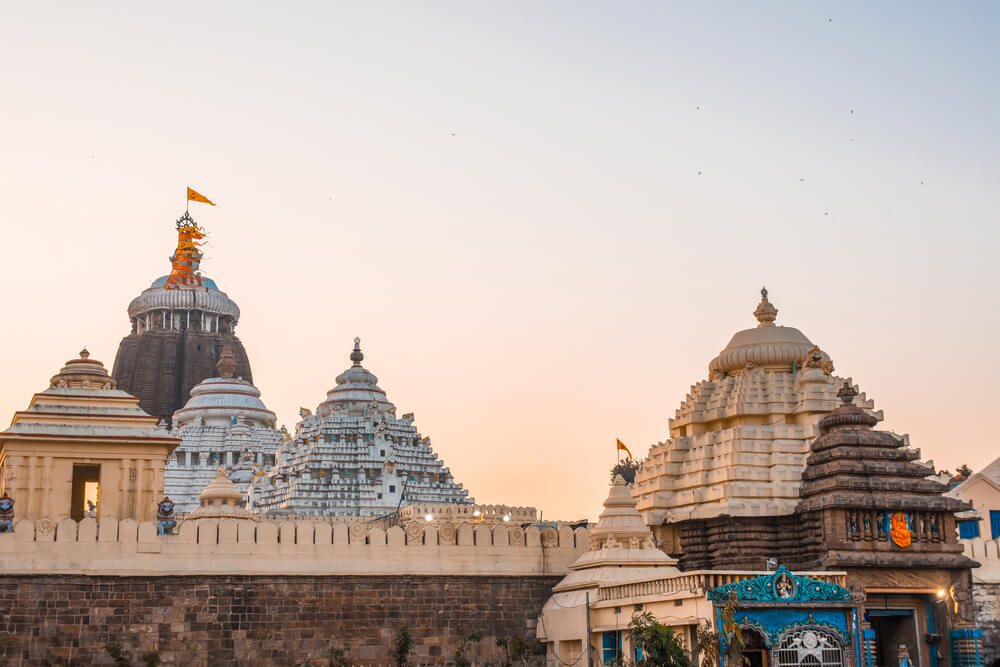
Jagannath Temple, Puri – The Abode of Lord Jagannath
The Jagannath Temple in Puri, Odisha, is one of the most revered Hindu temples in India, dedicated to Lord Jagannath (a form of Lord Vishnu), along with his siblings Balabhadra and Subhadra. Famous for its grand architecture, spiritual significance, and unique rituals, the temple attracts millions of pilgrims and tourists from across the globe.
The temple complex features a majestic shikhara (tower), intricate carvings, and expansive courtyards, reflecting the Kalinga style of architecture. It is renowned for the Rath Yatra (Chariot Festival), where the deities are taken out on enormous, beautifully decorated chariots, drawing devotees in massive numbers. Daily rituals, traditional offerings, and centuries-old customs make the Jagannath Temple a vibrant center of devotion and culture.
Apart from its religious importance, the temple symbolizes Odisha’s rich cultural heritage, art, and architecture, making Puri not just a spiritual hub but also a destination for history enthusiasts and travelers seeking a deeper connection with India’s sacred traditions.
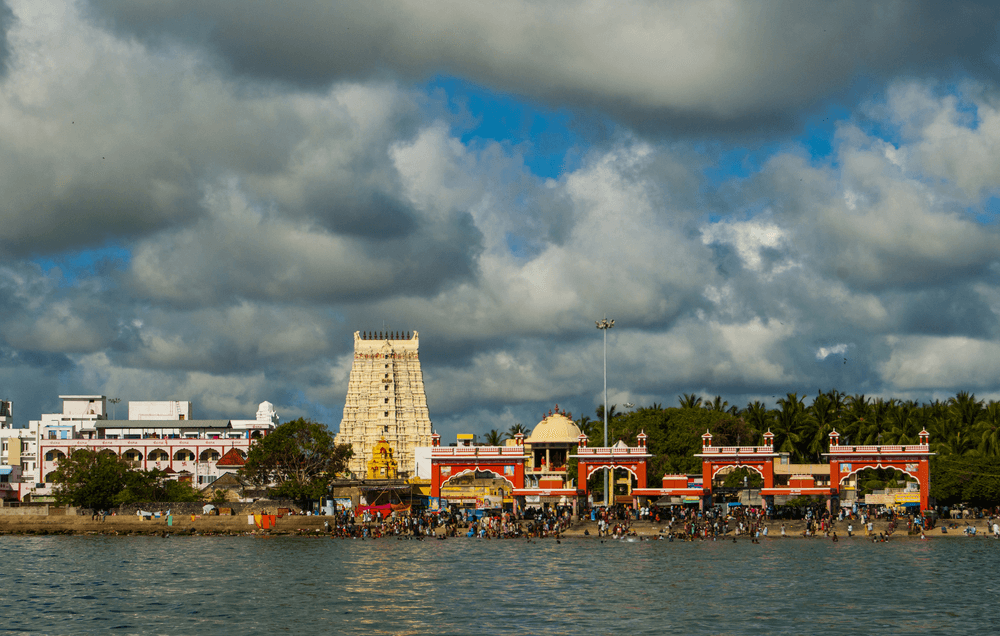
Ramanathaswamy Temple, Rameswaram – Sacred Abode of Lord Shiva
The Ramanathaswamy Temple, located in Rameswaram, Tamil Nadu, is one of the most sacred Hindu temples dedicated to Lord Shiva. This historic temple holds immense religious significance as it is believed to be the site where Lord Rama worshipped Lord Shiva to absolve sins after defeating Ravana, making it an important pilgrimage on the Char Dham Yatra circuit.
The temple is renowned for its long corridors, towering gopurams, and exquisitely carved pillars, exemplifying classic Dravidian architecture. The sanctum sanctorum houses the revered Shiva Lingam, and the temple complex includes numerous shrines, sacred water tanks, and elaborate halls for rituals and ceremonies.
Ramanathaswamy Temple is also famous for its elaborate rituals, daily poojas, and grand festivals, especially the Mahashivaratri celebrations, which draw devotees from across the country. Beyond its spiritual significance, the temple stands as a symbol of Tamil heritage, architectural brilliance, and centuries-old devotion, making it a must-visit destination for pilgrims, historians, and travelers seeking cultural and spiritual enrichment.
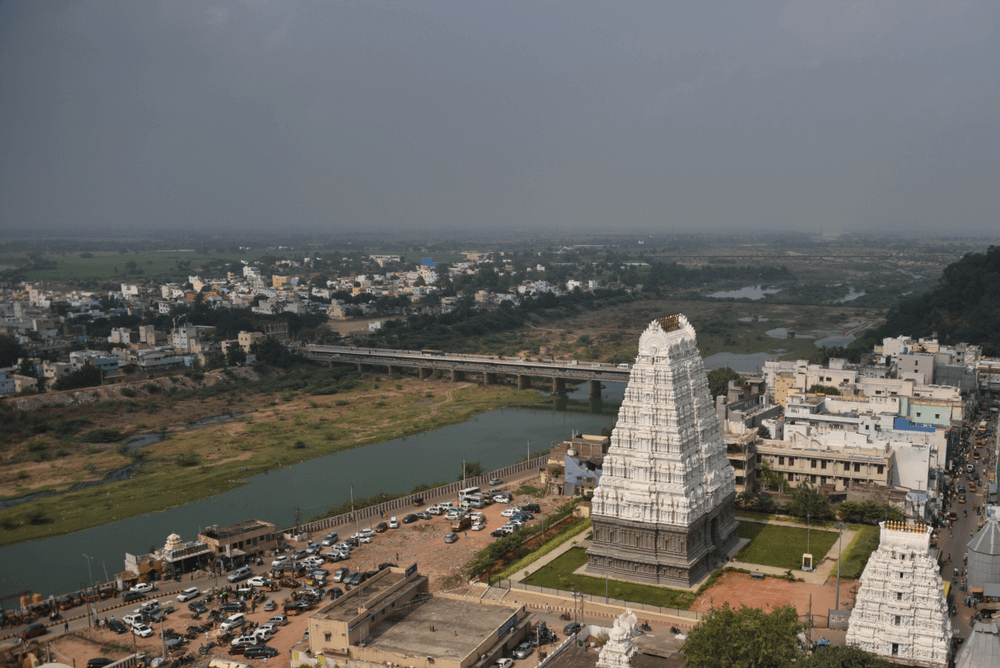
Sri Kalahasti Temple, Andhra Pradesh – The Abode of Lord Shiva
The Sri Kalahasti Temple, located in Srikalahasti, Andhra Pradesh, is a revered Hindu temple dedicated to Lord Shiva, worshipped here as Kalahasteshwara. Situated on the banks of the Swarnamukhi River, the temple is famous for its Vayu Linga, representing the element of air, making it one of the Pancha Bhoota Stalas – five sacred temples dedicated to the five elements.
The temple is renowned for its ancient Dravidian architecture, including intricately carved pillars, towering gopurams, and sprawling courtyards that reflect centuries of spiritual and architectural heritage. Devotees flock to the temple to seek blessings and participate in its elaborate rituals, daily poojas, and significant festivals, including the famous Srikalahasti Brahmotsavam.
Apart from its religious importance, Sri Kalahasti Temple is celebrated for its peaceful ambiance, historical significance, and scenic surroundings, offering pilgrims and visitors a deeply spiritual and culturally enriching experience. It stands as a symbol of faith, devotion, and Andhra Pradesh’s temple traditions, making it a must-visit pilgrimage site.
Kanyakumari, Tamil Nadu – Kumari Amman Temple
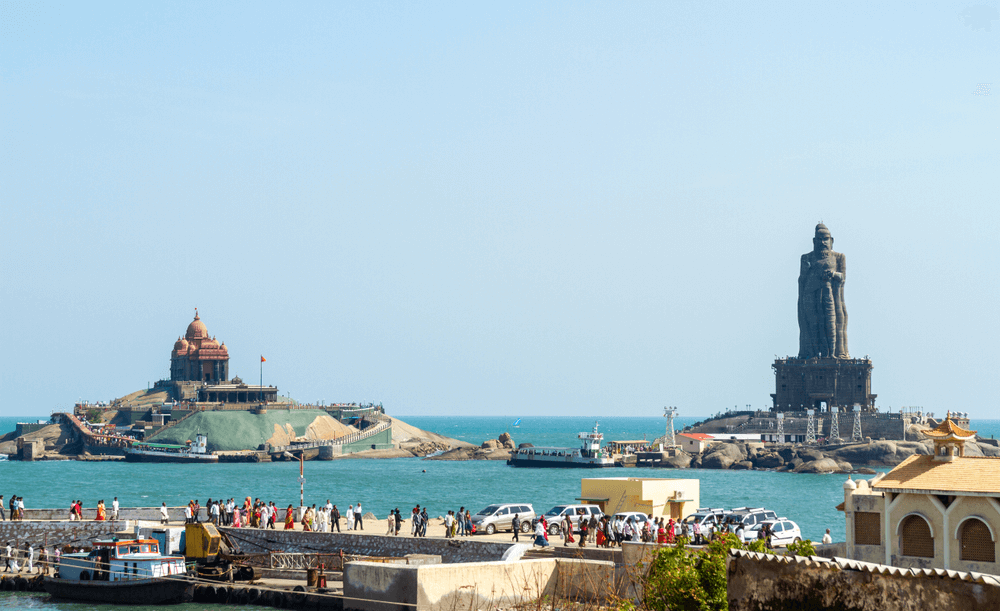
The Kumari Amman Temple, located at the southernmost tip of India in Kanyakumari, Tamil Nadu, is dedicated to Goddess Kanyakumari (a form of Goddess Parvati). This revered temple is an important pilgrimage site for devotees seeking the blessings of the virgin goddess, believed to protect and guide her followers.
The temple’s architecture reflects traditional South Indian style, with intricately carved structures and a sanctum that houses the idol of Goddess Kanyakumari. The site is also famous for its unique geographical location, where the Arabian Sea, Bay of Bengal, and Indian Ocean meet, adding a breathtaking natural backdrop to the spiritual experience.
Kanyakumari Temple is not only significant for its religious and cultural heritage, but it also draws visitors for its scenic beauty, tranquil environment, and vibrant festivals, including Navaratri celebrations. The temple stands as a symbol of faith, devotion, and Tamil Nadu’s rich temple traditions, making it a must-visit destination for pilgrims and travelers alike.
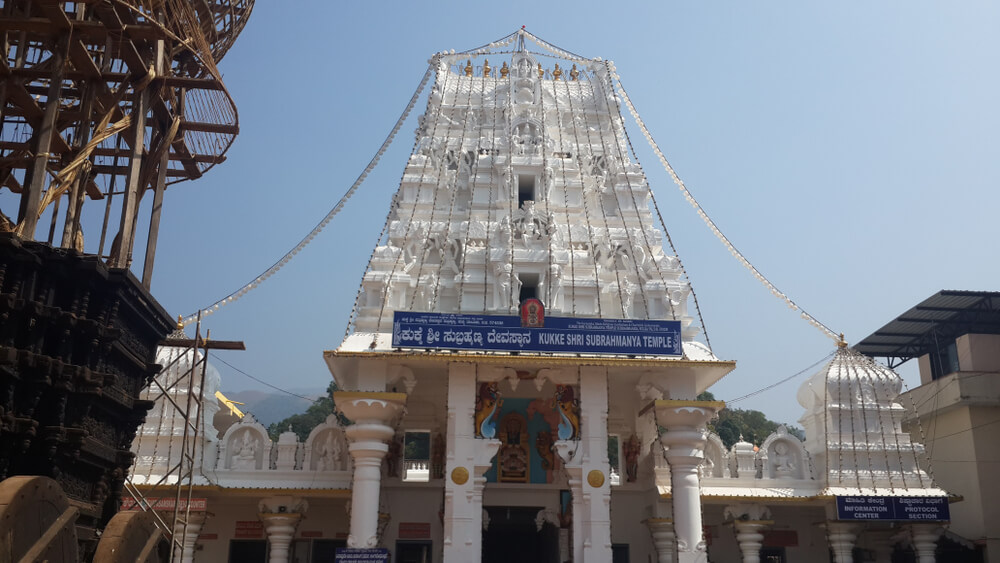
Kukke Subramanya Temple, Karnataka – The Abode of Lord Subramanya
The Kukke Subramanya Temple, located in Karnataka, is a revered pilgrimage site dedicated to Lord Subramanya (Kartikeya), the serpent god. Nestled in the lush greenery of the Western Ghats, the temple is famous for its spiritual significance, serene surroundings, and unique rituals, attracting devotees from across India seeking blessings for health, prosperity, and protection from evil forces.
The temple showcases traditional South Indian architecture, with beautifully carved pillars, sanctums, and intricate sculptures that reflect centuries of devotion and craftsmanship. A unique feature of this temple is the worship of Naga deities (serpents) alongside Lord Subramanya, making it a prominent center for Naga pooja and rituals.
Festivals like Subramanya Shasti are celebrated with grandeur, drawing large crowds of devotees who participate in vibrant processions and religious ceremonies. Beyond its religious importance, Kukke Subramanya Temple offers a tranquil and spiritually uplifting experience, combining devotion, natural beauty, and Karnataka’s rich temple traditions, making it a must-visit destination for pilgrims and travelers alike.
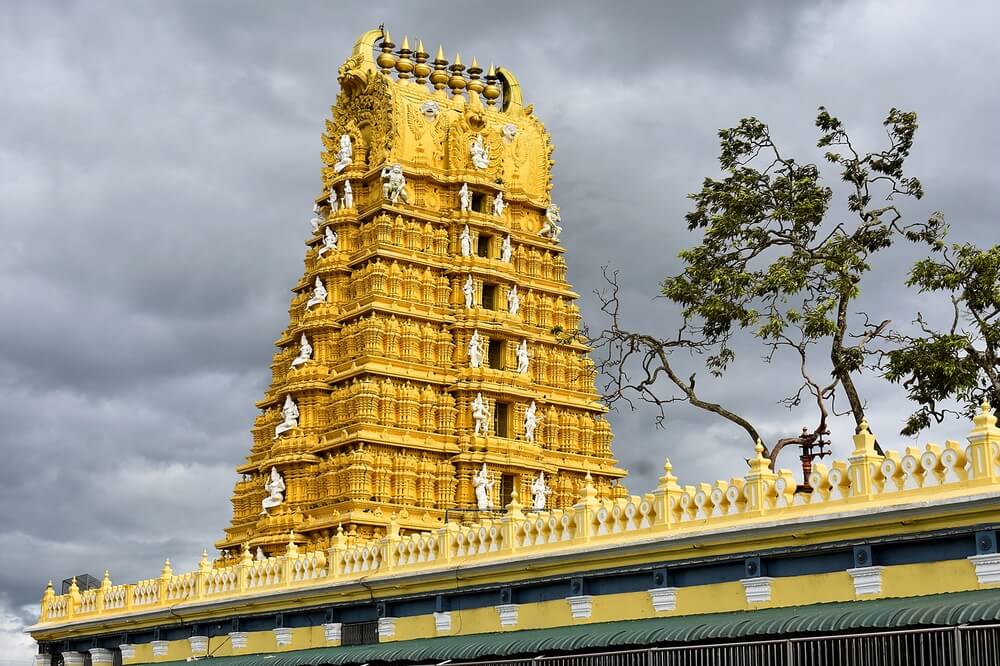
Sri Chamundeshwari Temple, Mysuru – Divine Abode of Goddess Chamundeshwari
The Sri Chamundeshwari Temple, located atop the Chamundi Hill in Mysuru, Karnataka, is dedicated to Goddess Chamundeshwari (a form of Goddess Durga), the fierce protector and patron deity of the city. This historic temple is renowned for its majestic Dravidian architecture, featuring intricately carved pillars, grand gopurams, and a sanctum that houses the powerful idol of the goddess.
Devotees climb the 1,000-step ascent to reach the temple, experiencing a journey of devotion and spiritual reflection. The temple is particularly famous for its Dussehra celebrations, where elaborate rituals and grand processions highlight Mysuru’s rich cultural heritage. The site also offers panoramic views of the city and surrounding landscapes, making it a spiritually and visually enriching destination.
Sri Chamundeshwari Temple stands as a symbol of faith, divine power, and Karnataka’s temple traditions, attracting pilgrims, tourists, and culture enthusiasts alike. Its blend of religious significance, architectural splendor, and scenic location makes it a must-visit landmark in Mysuru.
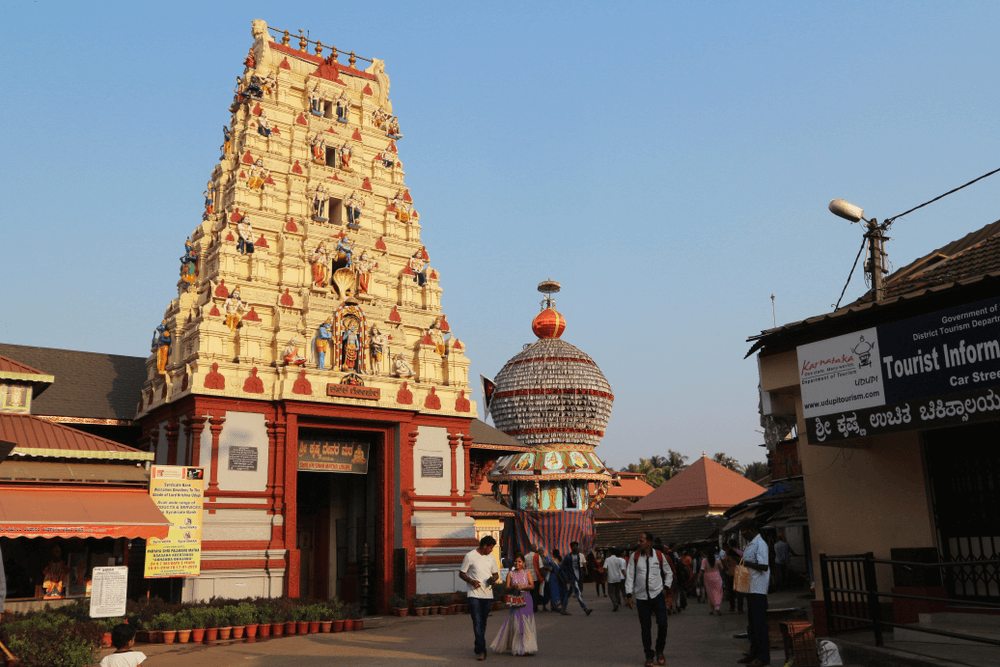
Udupi, Karnataka – Sri Krishna Matha
The Sri Krishna Matha in Udupi, Karnataka, is one of the most revered pilgrimage sites in South India, dedicated to Lord Krishna. Founded by the great saint Madhvacharya, the temple is a center of Dvaita Vedanta philosophy and has been a spiritual beacon for centuries, attracting devotees from across India and abroad.
The temple is renowned for its unique idol of Lord Krishna, believed to have been installed by Madhvacharya himself, and is worshipped daily with elaborate rituals and offerings. The temple complex showcases traditional South Indian architectural style, with intricately carved wooden pillars, elegant halls, and a sacred Kanakana Kindi window, through which devotees have a divine view of the deity.
Udupi Sri Krishna Matha is also famous for its festivals, such as Janmashtami and Paryaya, which are celebrated with grandeur, music, and devotion. The temple is surrounded by a vibrant cultural atmosphere, including traditional music, food offerings, and religious discourses, making it a hub of faith, learning, and heritage. It stands as a symbol of spiritual devotion, Karnataka’s rich temple traditions, and timeless architecture, making it a must-visit for pilgrims and cultural enthusiasts alike.
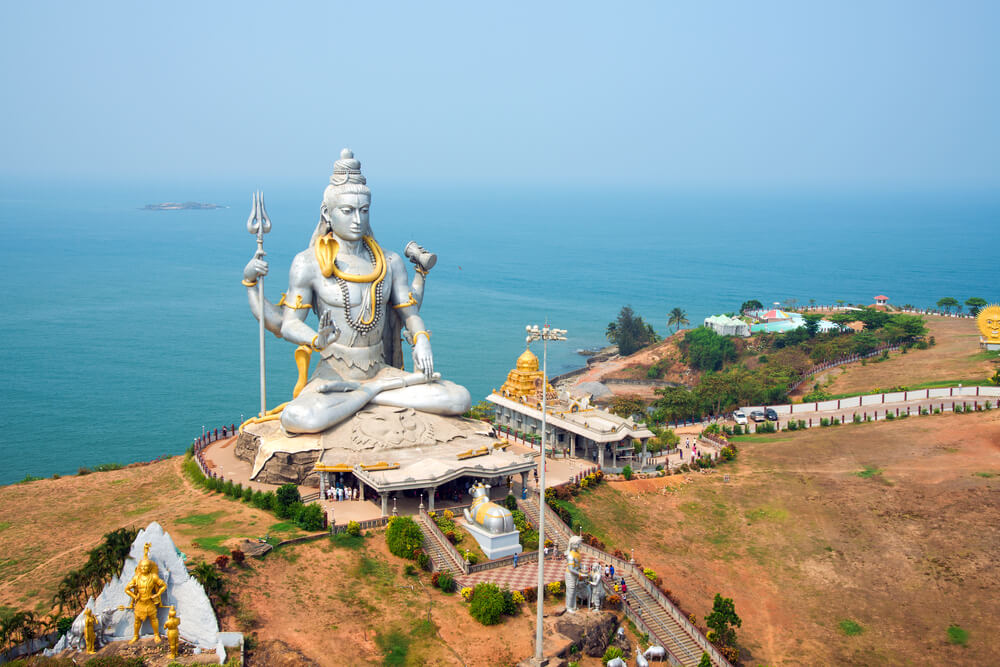
Murudeshwar, Karnataka – Temple of Lord Shiva by the Sea
The Murudeshwar Temple, located in Murudeshwar, Karnataka, is a renowned pilgrimage site dedicated to Lord Shiva, famous for its tallest Shiva statue in the world and its stunning location on the coast of the Arabian Sea. The temple complex offers a perfect blend of spiritual devotion, architectural grandeur, and scenic beauty, attracting thousands of pilgrims and tourists every year.
The temple features a massive gopuram, intricately carved pillars, and beautifully designed sanctums, reflecting traditional Dravidian architectural style. The towering Rudra statue of Lord Shiva, standing at 123 feet, is an iconic landmark visible from miles away. The temple is surrounded by picturesque landscapes, including the Murudeshwar beach and lush hills, enhancing the spiritual and visual experience.
Festivals like Maha Shivaratri are celebrated with great fervor, drawing devotees for special poojas, rituals, and cultural events. Murudeshwar Temple is not only a center of devotion but also a symbol of Karnataka’s rich temple traditions, coastal beauty, and architectural excellence, making it a must-visit destination for pilgrims, travelers, and photography enthusiasts alike.
Kumbakonam, Tamil Nadu – Navagraha Temples
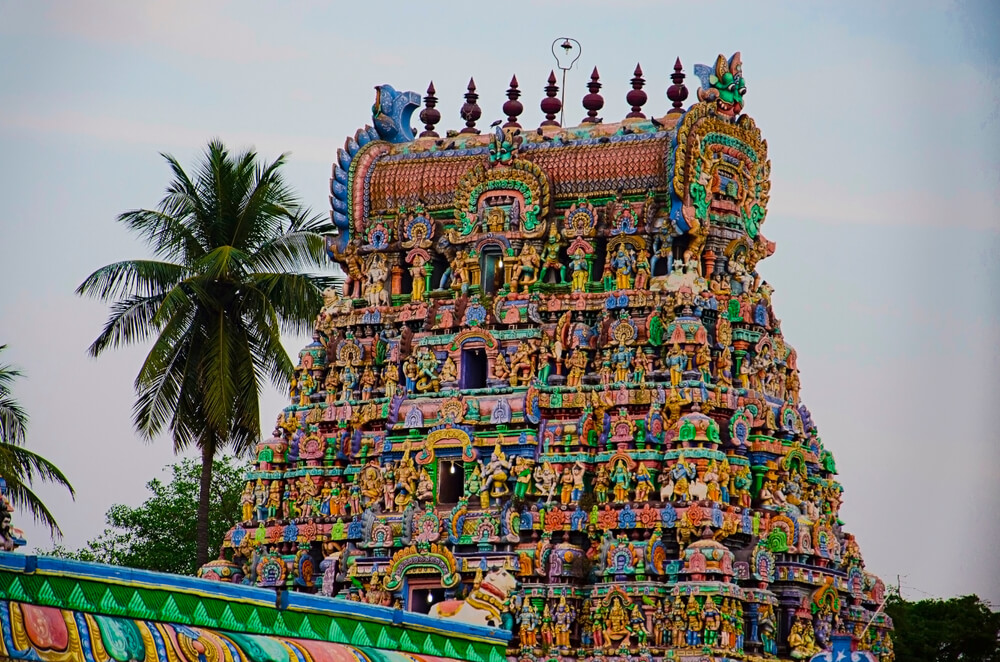
Kumbakonam, often called the “Temple Town of Tamil Nadu,” is famous for its cluster of Navagraha Temples, each dedicated to one of the nine celestial planets (Navagrahas) in Hindu astrology. These temples form a significant pilgrimage circuit for devotees seeking to remedy astrological influences and seek blessings for prosperity, health, and well-being.
The Navagraha temples in and around Kumbakonam showcase classic Dravidian architecture, with intricately carved gopurams, sanctums, and halls that reflect centuries of devotion and craftsmanship. Each temple is associated with a specific planet—Surya (Sun), Chandra (Moon), Mangala (Mars), Budha (Mercury), Guru (Jupiter), Shukra (Venus), Shani (Saturn), Rahu, and Ketu—and features rituals, offerings, and prayers tailored to its celestial significance.
Pilgrims often undertake a Navagraha Yatra, visiting all nine temples in a single journey, combining spiritual devotion with cultural exploration. Festivals and special poojas dedicated to the planets are celebrated with grandeur, making Kumbakonam a unique hub of astrology, spirituality, and temple heritage. The Navagraha temples stand as a testament to Tamil Nadu’s rich religious traditions, architectural brilliance, and astrological practices, attracting devotees and tourists alike.